 Quantum Ventura
Request a briefing
Quantum Ventura
Request a briefing
CyberNeuro-RT
Network defense
An IoT, AI/ML-driven, highly-scalable, real-time network defense and threat intelligence tool with CPU, GPU or low-power neuromorphic chip deployment.
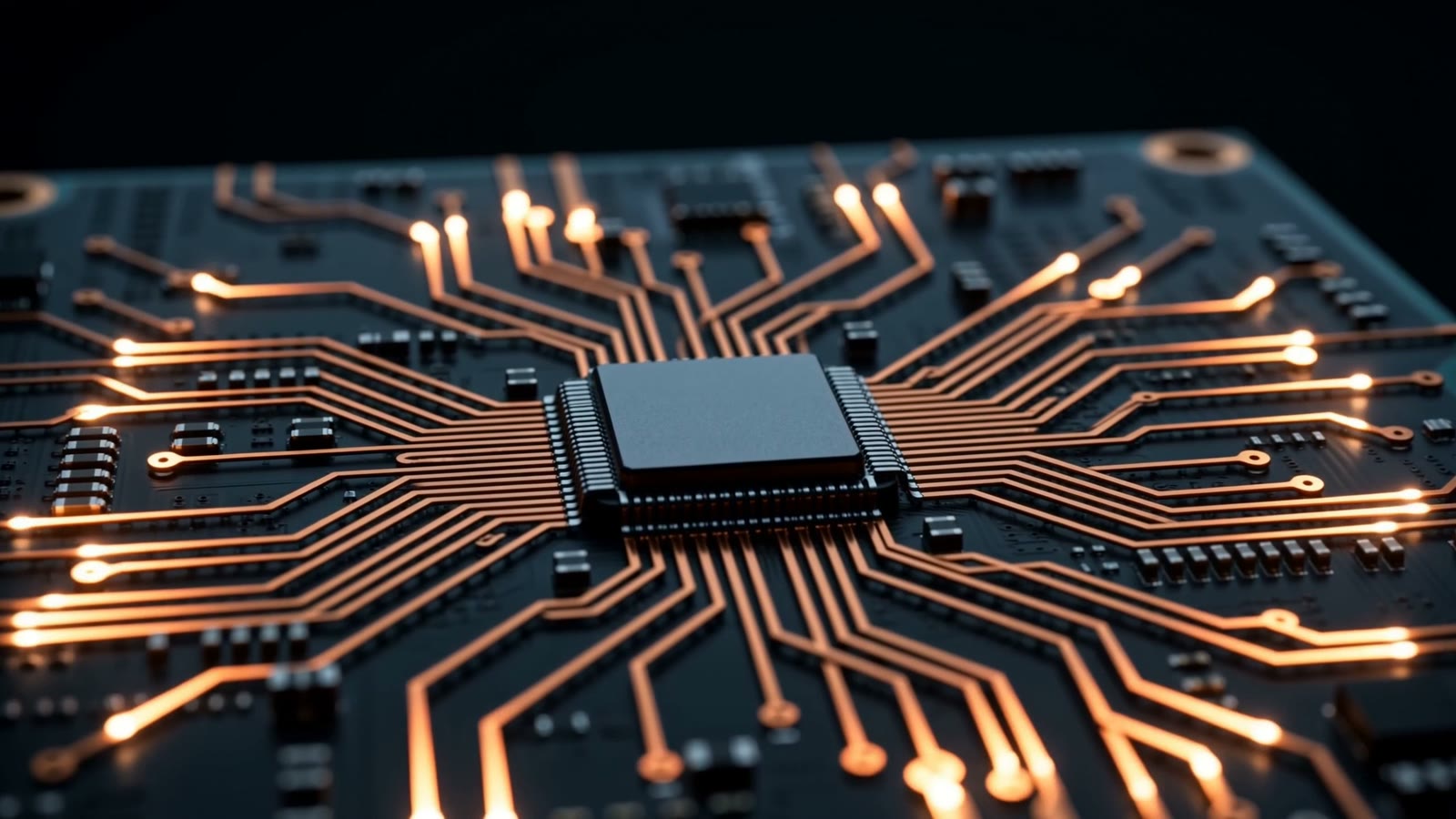
A Quantum Ventura, Lockheed Martin, and Penn State Innovation. CyberNeuro-RT (CNRT) has been developed in partnership with Lockheed Martin Co.'s MFC Division and Pennsylvania State University under partial funding from the U.S. Department of Energy.
Cutting-edge unsupervised ML.
How CyberNeuro-RT detects, what it trains on, where it runs, and how it presents what it finds.
Cutting-Edge Unsupervised ML
- Scalable Unsupervised Outlier Detection (SUOD)
- 6 ML algorithm ensemble
- Model approximation for complex models
- Variational Autoencoder (VAE), trained to minimize reconstruction error of initial input and reconstructed output
Proprietary Pipeline Adapts to Any Dataset
75x dataset growth in under 2 months.
- Existing dataset ingestion: proprietary system enables ingestion of any existing network capture dataset with flexible support for any labelling system
- From-the-wild zero day sampling: system enables capturing and simulation of novel threats for additional data sampling
- Data generation via simulation: ThreatATI database and proprietary ingestion system enable sampling and augmentation for cataloged threats from proprietary and public threat databases
- Follow threats home with dark web tracking
At-the-edge Neuromorphic Processing
Two offerings from the leading neuromorphic developers: Intel and Brainchip.
- Small form factor, magnitudes less power consumption than GPU
- On-chip learning for deployment network specific attack detection
- Intel Loihi
- Brainchip Akida
Dashboards Minimize Operator Fatigue
A robust, multi-faceted, user-friendly cyber analyst dashboard prevents operator fatigue that allows cyber attacks to happen. Large numbers of false alarms cause real threats to be missed, and false alarms fatigue the cyber analyst, further increasing the risk of missed threats.
- AI based false alarms are minimized, trained for minimal false positive rate
- Possible threats are ranked by importance and confidence
- Only the most relevant and likely alarms are actioned upon
Programme record.
| Partners | Lockheed Martin Co. MFC Division · Pennsylvania State University |
| Funding | Partial funding from the U.S. Department of Energy |
| Deployment | CPU, GPU or low-power neuromorphic chip |
| Neuromorphic | Intel Loihi · Brainchip Akida |